 English
  Español
  Português
  日本語
日本語  Français
  繁體中文
繁體中文  简体中文
简体中文 
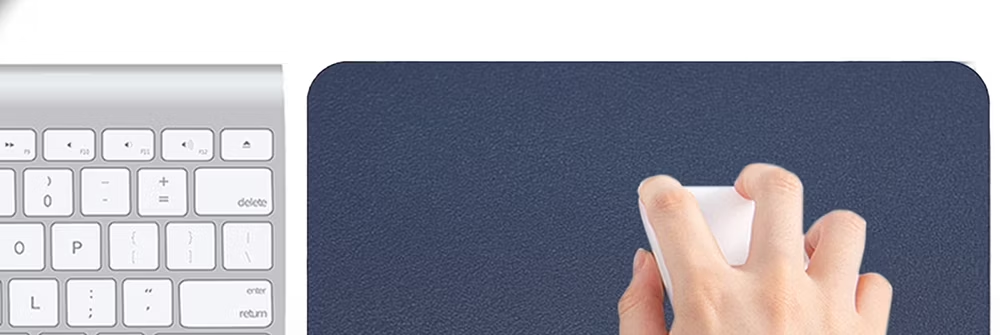
For high-volume B2B buyers and tech accessory brands, selecting the right base material for a mouse pad is a decision that impacts everything from shipping costs and branding quality to the end-user’s health. While the market is flooded with cheap alternatives, understanding the technical differences between Polyurethane (PU) Foam, Natural Rubber, and PVC is essential for building a premium product line.
In this guide, we break down the three most common materials to help you decide which one aligns with your brand’s standards for 2026.
1. PU Foam (The Premium Standard)
Polyurethane (PU) foam is rapidly becoming the preferred choice for high-end ergonomic desk accessories. Unlike its competitors, PU is a highly customizable synthetic polymer.
- **The Grip:** PU has a naturally "tacky" micro-structure. When used as a mouse pad base, it creates a microscopic suction effect on desk surfaces (wood, glass, or metal) without needing chemical glues.
- **The Smell:** PU is virtually **odorless**. Because it doesn't require the sulfur-based vulcanization process used in rubber, it is the safest choice for enclosed office spaces.
- **The Weight:** PU is significantly lighter than rubber. For international B2B shipping, this means lower freight costs per unit—a massive advantage for bulk orders.
- **The Durability:** It does not dry out or crumble. It maintains its soft, cushioned feel for years.
2. Natural & Synthetic Rubber (The Traditional Choice)
Rubber has been the industry standard for decades, but it carries several technical "legacy" issues that modern brands are looking to avoid.
- **The Grip:** Rubber relies on weight and a textured "tire-tread" pattern to stay in place. While effective, it lacks the sophisticated suction of PU.
- **The "Rubber Smell":** This is the biggest drawback. The off-gassing of VOCs (Volatile Organic Compounds) can be overwhelming. Many customers return products simply because the "new rubber smell" won't dissipate.
- **Degradation:** Over time, rubber oxidizes. It becomes brittle, starts to flake (creating "black dust" on the desk), and loses its elasticity.
- **Environmental Impact:** While natural rubber is renewable, the processing involves heavy chemical stabilizers that are difficult to recycle.
3. PVC (The Budget Alternative)
Polyvinyl Chloride (PVC) is often used for the ultra-low-cost "promotional" mouse pads. While cheap, it offers the poorest user experience.
- **The Grip:** PVC is a hard plastic. To make it non-slip, manufacturers must add heavy amounts of plasticizers (phthalates), which can migrate over time, making the pad feel "greasy."
- **The Ergonomics:** PVC has almost zero "rebound." It is a hard surface that provides no relief for the wrist, leading to faster fatigue.
- **Safety Concerns:** PVC is under heavy scrutiny globally due to phthalates and lead stabilizers. Many European and US retailers now have strict "No-PVC" policies for office supplies.
- **Tracking Issues:** PVC surfaces often reflect light inconsistently, which can cause "jitter" in high-performance optical mice.
Comparative Analysis Table
| Feature | PU Foam (Aybroad) | Natural Rubber | PVC Plastic |
|---|---|---|---|
| **Odor Level** | None (Odorless) | Strong (Chemical/Sulfur) | Moderate (Plasticizer) |
| **Anti-Slip Power** | High (Micro-Suction) | Medium (Weight-based) | Low (Slide-prone) |
| **Wrist Support** | Excellent (Viscoelastic) | Fair (Firm) | Poor (Hard) |
| **Shipping Weight** | Ultra-Light (Saves Cost) | Heavy | Light |
| **Lifespan** | 5+ Years | 1-2 Years (Oxidizes) | 1 Year (Brittle) |
Why Aybroad Chooses PU for B2B Clients
At Aybroad, we’ve moved away from PVC and limited our rubber production in favor of **Advanced PU Foaming**. Why? Because the modern B2B market demands products that are **Skin-friendly, Odorless, and High-Performance.**
When you provide a PU mouse pad to your client, you aren't just giving them a surface; you are giving them a durable, ergonomic tool that reflects the quality of your brand. From custom specifications to precision thickness, PU allows for a level of manufacturing excellence that rubber and PVC simply cannot match.
Ready to upgrade your supply chain? Explore our custom PU foaming solutions today.