 English
  Español
  Português
  日本語
日本語  Français
  繁體中文
繁體中文  简体中文
简体中文 
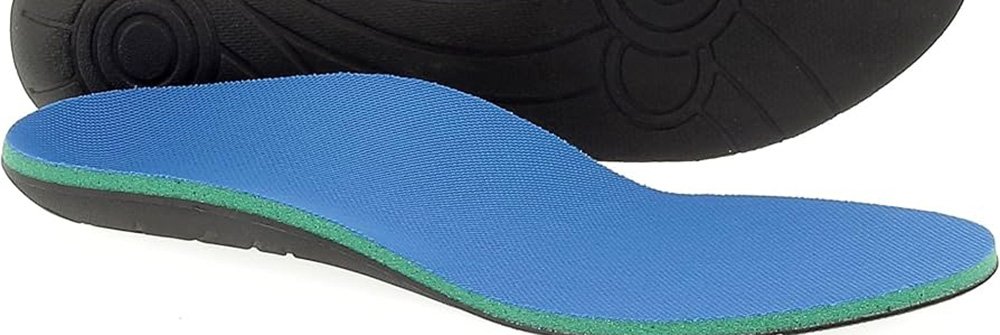
The foot and ankle health market has seen explosive growth recently. As an insole manufacturer, we’ve observed a massive shift in orders from "general comfort" to "biomechanical correction." Orthotic insoles are no longer medical devices confined to clinics; they are becoming essential daily accessories for the public.
1. The Core of Orthotics: The Three-Point Support Principle
Foot health depends on the integrity of the arches. A perfect orthotic insole must achieve a "three-point balance": the medial longitudinal arch, the lateral longitudinal arch, and the transverse arch.
-
Arch Support: For individuals with flat feet, we utilize rigid or semi-rigid materials like TPU or high-density reinforced EVA. This support must be "firm yet flexible"—rigid enough to maintain arch height, yet resilient enough to allow for natural foot deformation during walking.
-
Deep Heel Cradle: This is a detail often overlooked in standard insoles. A deep heel cup "locks" the fatty tissue of the heel in place and stabilizes the calcaneus (heel bone). This prevents over-pronation or supination, which is the root cause of many knee and hip pains.
2. The Aesthetics of Layering
An orthotic insole is typically a composite of 3 to 5 layers, each serving a specific function:
-
Top Cover: Wear-resistant, anti-slip microfiber or antibacterial fabric that makes direct contact with the skin or sock.
-
Comfort Layer: A low-hardness, slow-rebound material used to enhance the initial "step-in" feel.
-
Supportive Core: The "engine" of the insole, usually a 3D-molded TPU or carbon fiber shank designed to follow the foot's anatomy.
-
Base Layer: High-grip material to ensure the insole does not slide inside the shoe.
3. Digital Manufacturing: From Casting to Finished Product
Traditional orthotic production relied on manual grinding, which is inefficient and prone to error. Our factory has integrated CAD/CAM systems and 3D foot scanning technology:
-
Data Analysis: We capture the user's plantar pressure distribution through high-precision scanners.
-
Customized Tooling: Data-driven 3D models allow for CNC machining or high-precision mold opening, resulting in components that perfectly match anatomical structures.
-
Consistency at Scale: The greatest advantage of industrial production is ensuring that every pair of orthotics strictly adheres to preset biomechanical parameters, with tolerances held within 0.5mm.
4. Market Trend: Prevention Over Cure
Current trends show an increasing number of teenagers wearing preventative orthotic insoles. By providing proper arch guidance during growth years, many adult postural issues (such as O-shaped legs or uneven shoulders) can be avoided. We are currently partnering with several functional footwear brands to develop lighter, more discreet orthotics suitable for all-day, everyday wear.