 English
  Español
  Português
  日本語
日本語  Français
  繁體中文
繁體中文  简体中文
简体中文 
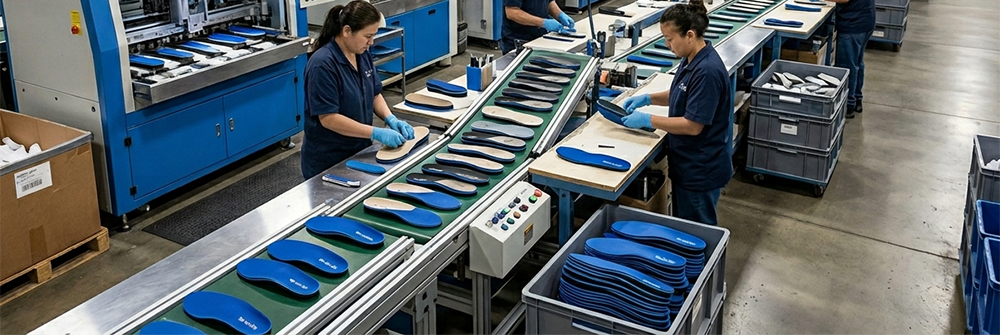
In today’s global supply chain, many brands and importers work with overseas manufacturers they may never visit in person. While factory audits are ideal, they are not always practical due to time, cost, or travel limitations.
The good news is that you can still effectively evaluate an insole supplier remotely—if you know what to look for.
In this guide, we outline a practical, step-by-step approach to help you assess a supplier’s reliability, capability, and product quality without visiting the factory.
1. Evaluate Communication Quality First
Strong communication is often the clearest indicator of a reliable supplier.
What to check:
-
Response speed (within 24 hours?)
-
Clarity and professionalism
-
Technical understanding of insoles
-
Ability to answer detailed questions
2. Request Detailed Product Information
A professional supplier should provide complete and structured product data.
Ask for:
-
Material specifications (EVA, PU, TPU, etc.)
-
Density and hardness (Shore A/C)
-
Layer structure and thickness
-
Performance claims (shock absorption, durability)
3. Analyze Sample Quality Carefully
Samples are the most important part of remote evaluation.
What to test:
-
Comfort and cushioning
-
Compression resistance (does it flatten easily?)
-
Surface quality (finishing, glue, fabric)
-
Odor and material quality
4. Request Production Videos and Photos
Ask the supplier to provide real production footage, not just marketing images.
Look for:
-
Foam cutting and molding processes
-
Lamination and bonding methods
-
Quality inspection procedures
-
Packaging lines
5. Verify Certifications and Compliance
For Europe and US markets, compliance is critical.
Request documents such as:
-
REACH compliance
-
RoHS reports
-
OEKO-TEX certification
-
Material test reports
6. Evaluate Customization Capability
A strong supplier should support OEM/ODM projects.
Ask:
-
Can they adjust density and hardness?
-
Can they design multi-layer structures?
-
Can they develop new molds?
-
Do they offer branding (logo, packaging)?
7. Check Production Capacity and Lead Time
Understanding capacity helps avoid future delays.
Key questions:
-
Monthly production volume
-
Typical lead time (samples and bulk)
-
Ability to handle large orders
8. Review Customer References and Experience
Ask about:
-
Existing clients (brands, markets)
-
Export experience (EU, US, Southeast Asia)
-
Case studies or success stories
9. Use Third-Party Inspection Services
If you cannot visit the factory, consider:
-
Third-party audits
-
Pre-shipment inspections
-
Quality control services
10. Start with a Trial Order
Before committing to large orders:
-
Place a small trial order
-
Evaluate consistency and quality
-
Test communication during production
Common Mistakes to Avoid
1. Choosing based only on price
Low prices often mean lower quality or hidden risks.
2. Skipping sample testing
Never rely on photos or descriptions alone.
3. Ignoring communication issues
Poor communication usually leads to bigger problems later.
4. Not verifying documents
Fake or outdated certifications are common.
Quick Supplier Evaluation Checklist
Before selecting a supplier, confirm:
-
✅ Clear and professional communication
-
✅ Detailed product specifications
-
✅ High-quality samples
-
✅ Verified certifications
-
✅ Real production capability
-
✅ Customization support
-
✅ Stable lead time and capacity
Final Thoughts
Evaluating an insole supplier without visiting the factory is absolutely possible with the right approach. By focusing on communication, samples, technical details, and verification processes, you can significantly reduce risks and build a reliable partnership.
For brands and importers, supplier selection is not just about price—it’s about long-term quality, consistency, and trust.
At Aybroad, we support clients worldwide with transparent communication, sample development, and full OEM/ODM insole manufacturing services, making remote collaboration simple and efficient.
👉 Contact us today to learn more or request samples for evaluation.