 English
  Español
  Português
  日本語
日本語  Français
  繁體中文
繁體中文  简体中文
简体中文 
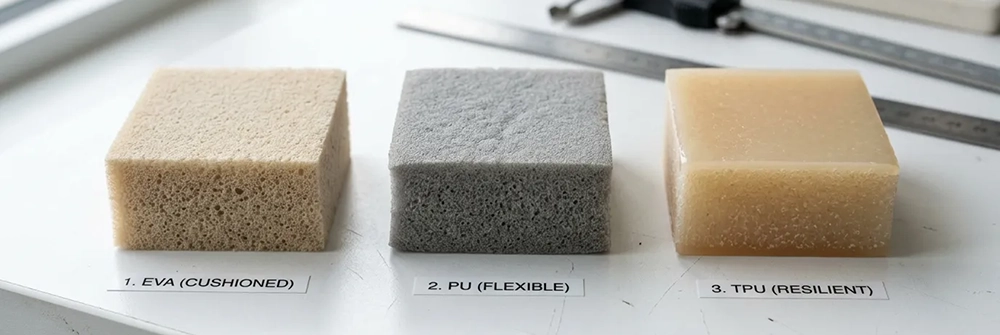
Choosing the right material is one of the most important decisions when developing or sourcing insoles. Among all available options, EVA, PU, and TPU are the three most widely used materials in the footwear and orthotic industry.
Each material has its own strengths and limitations in terms of comfort, durability, shock absorption, and cost. In this guide, we provide a complete comparison to help brands, importers, and product developers select the best material for their specific application.
What Are EVA, PU, and TPU?
Before comparing performance, it’s important to understand what each material is.
EVA (Ethylene Vinyl Acetate)
EVA is a lightweight foam widely used in sports and casual insoles. It is known for its flexibility, cushioning, and cost-effectiveness.
👉 Common uses:
-
Sports insoles
-
Running shoes
-
Everyday comfort insoles
PU (Polyurethane)
PU is a more durable and resilient material compared to EVA. It provides better long-term cushioning and is often used in premium insoles.
👉 Common uses:
-
High-end comfort insoles
-
Orthotic insoles
-
Work shoes
TPU (Thermoplastic Polyurethane)
TPU is a highly elastic and durable material with excellent rebound and support properties. It is often used in performance or structural components.
👉 Common uses:
-
Sports performance insoles
-
Heel cups and support frames
-
Energy-return systems
Key Performance Comparison
1. Cushioning & Comfort
-
EVA: Soft and lightweight, offers immediate comfort
-
PU: Softer feel over time, adapts to foot shape
-
TPU: Firmer, focuses more on responsiveness than softness
👉 Winner: PU (best long-term comfort)
2. Shock Absorption
-
EVA: Good initial shock absorption, but decreases over time
-
PU: Excellent shock absorption with long-lasting performance
-
TPU: Moderate shock absorption, more focused on energy return
👉 Winner: PU
3. Energy Return (Rebound)
-
EVA: Low to moderate rebound
-
PU: Moderate rebound
-
TPU: Very high rebound and elasticity
👉 Winner: TPU
4. Durability & Compression Resistance
-
EVA: Prone to compression and deformation over time
-
PU: Strong resistance to compression, long lifespan
-
TPU: Extremely durable, maintains structure under stress
👉 Winner: TPU
5. Weight
-
EVA: Very lightweight
-
PU: Heavier than EVA
-
TPU: Medium weight
👉 Winner: EVA
6. Breathability
-
EVA: Can be perforated for airflow
-
PU: Less breathable unless specially designed
-
TPU: Limited breathability (usually used in small sections)
👉 Winner: EVA
7. Cost
-
EVA: Lowest cost
-
PU: Medium to high cost
-
TPU: Highest cost
👉 Winner: EVA
Summary Table
| Performance Factor | EVA | PU | TPU |
|---|---|---|---|
| Cushioning | ⭐⭐⭐⭐ | ⭐⭐⭐⭐⭐ | ⭐⭐⭐ |
| Shock Absorption | ⭐⭐⭐ | ⭐⭐⭐⭐⭐ | ⭐⭐⭐ |
| Energy Return | ⭐⭐ | ⭐⭐⭐ | ⭐⭐⭐⭐⭐ |
| Durability | ⭐⭐ | ⭐⭐⭐⭐ | ⭐⭐⭐⭐⭐ |
| Weight | ⭐⭐⭐⭐⭐ | ⭐⭐⭐ | ⭐⭐⭐⭐ |
| Cost | ⭐⭐⭐⭐⭐ | ⭐⭐⭐ | ⭐⭐ |
Which Material Should You Choose?
Choose EVA if:
-
You need a lightweight and cost-effective solution
-
The product is for casual or short-term use
-
You are targeting mass-market footwear
👉 Best for: entry-level and sports insoles
Choose PU if:
-
You want premium comfort and durability
-
The product is for long-term use
-
You need better shock absorption
👉 Best for: orthotic, work, and high-end comfort insoles
Choose TPU if:
-
You need high energy return and performance
-
The product requires structural support
-
You are developing sports or high-performance insoles
👉 Best for: performance and technical designs
Multi-Material Design: The Best Approach
In modern insole development, most high-quality products use a combination of materials rather than just one.
Example structure:
-
Top layer: PU (comfort)
-
Mid layer: EVA (cushioning)
-
Bottom/support: TPU (stability & rebound)
👉 This combination delivers:
-
Better comfort
-
Stronger support
-
Longer lifespan
Common Mistakes to Avoid
1. Choosing based only on cost
Low-cost EVA may reduce price but also reduce product lifespan.
2. Ignoring target users
Different users (athletes, workers, medical patients) need different performance features.
3. Overusing TPU
TPU is excellent but expensive and not always necessary in large areas.
4. Using single-material designs
This limits performance and reduces product competitiveness.
Final Thoughts
There is no “one-size-fits-all” material when it comes to insoles. The right choice depends on your product positioning, target market, and performance requirements.
-
EVA offers affordability and lightweight comfort
-
PU provides durability and long-term cushioning
-
TPU delivers performance and energy return
For brands and importers, combining these materials strategically is often the best solution.
At Aybroad, we specialize in custom insole development using EVA, PU, and TPU in optimized multi-layer constructions. Whether you are developing sports insoles, orthotics, or work footwear solutions, we can help you achieve the right balance between performance and cost.
👉 Contact us today to discuss your project or request a free sample.