 English
  Español
  Português
  日本語
日本語  Français
  繁體中文
繁體中文  简体中文
简体中文 
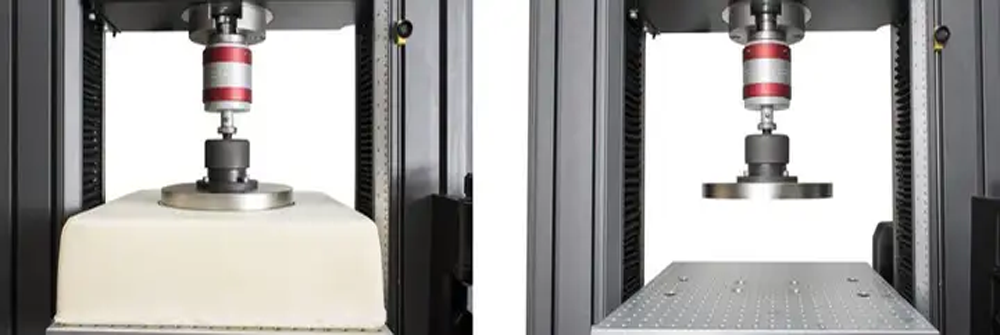
ASTM D3574 is a globally recognized standard issued by ASTM International. It is primarily used to evaluate the physical properties of flexible cellular materials, such as Polyurethane (PU) foam, EVA foam, and other synthetic foams.
This standard encompasses a comprehensive range of testing methods designed to assess essential characteristics like hardness, resilience, compression set, cell structure, and durability. These metrics are critical for ensuring quality control in products such as footwear insoles, furniture cushioning, mattresses, and automotive seating.
Key Test Items of ASTM D3574
1. Resilience (Ball Rebound)
This method measures the elastic recovery of the foam. It determines how well the material bounces back after being compressed.
-
Significance: Resilience is a key indicator of the material's ability to return to its original shape after a load is removed.
2. Compression Set
This test measures the permanent deformation of the foam after being subjected to prolonged compression. It is used to evaluate long-term durability.
-
Significance: A low compression set indicates that the foam is resistant to "bottoming out" or collapsing over time.
-
Typical Procedure: The specimen is compressed by 50% (or other specified ratios) and maintained at a specific temperature (usually 70°C) for 22 hours. The final thickness is measured after a recovery period.
3. Hardness (Indentation Force Deflection / Durometer)
This test measures the foam's firmness, often using Shore A or Shore C durometers. Hardness is closely related to the foam's density and cell structure.
-
Significance: It is used to evaluate the comfort level and support characteristics of the material.
4. Thickness Recovery
This assesses the material's ability to regain its original thickness after being subjected to specific pressure. High-quality foams exhibit superior recovery, ensuring long-lasting comfort.
5. Compression Load Deflection (CLD)
CLD measures the stress response of the foam at specific compression levels (typically 25% and 40%).
-
Significance: This data helps engineers understand the load-bearing capacity and support efficiency of the foam.
6. Shear Strength
This test evaluates the foam's resistance to shearing forces, measuring its stability and toughness when subjected to lateral stress.
7. Compression Strength
This measures the maximum force the foam can withstand at a specific thickness. It is essential for evaluating the weight-bearing limits of the material.
8. Porosity and Density
The cell structure (porosity) directly affects the breathability, comfort, and mechanical performance of the foam. ASTM D3574 provides standardized methods to calculate both density and air flow.
Brief Overview of Test Procedures
-
Resilience Test: A steel ball of a known mass is dropped from a standard height onto the foam specimen. The rebound height is measured, and the ratio of the rebound height to the drop height is calculated as the resilience percentage.
-
Compression Set Test: The sample is compressed to 50% of its original thickness and placed in an oven at 70°C for 22 hours. After the load is released, the thickness is measured to calculate the percentage of permanent loss.
-
Hardness Test: Using a Shore A or Shore C durometer, a standardized pressure foot is pressed into the sample. The resistance value is read directly from the gauge.
-
CLD Test: The foam is compressed to specific intervals (e.g., 25% or 40% of its original height), and the force required to reach those levels is recorded to determine its support profile.
Practical Applications of ASTM D3574
-
Quality Control: Ensures that foam materials consistently meet the rigorous requirements for durability and comfort in footwear, bedding, and seating industries.
-
Product Benchmarking: Allows manufacturers to compare materials from different suppliers using an "apples-to-apples" standardized metric.
-
Customized Solutions: Provides precise data to help manufacturers develop specialized materials that meet specific customer performance requirements.
Why Use ASTM D3574?
-
Global Standardization: Provides a unified, systematic methodology recognized by testing laboratories and manufacturers worldwide.
-
Data Reliability: Standardized procedures ensure that test results are accurate, repeatable, and unbiased.
-
Multidimensional Evaluation: Offers a holistic view of foam performance—going beyond simple hardness to include durability, load-bearing capacity, and resilience.