 English
  Español
  Português
  日本語
日本語  Français
  繁體中文
繁體中文  简体中文
简体中文 
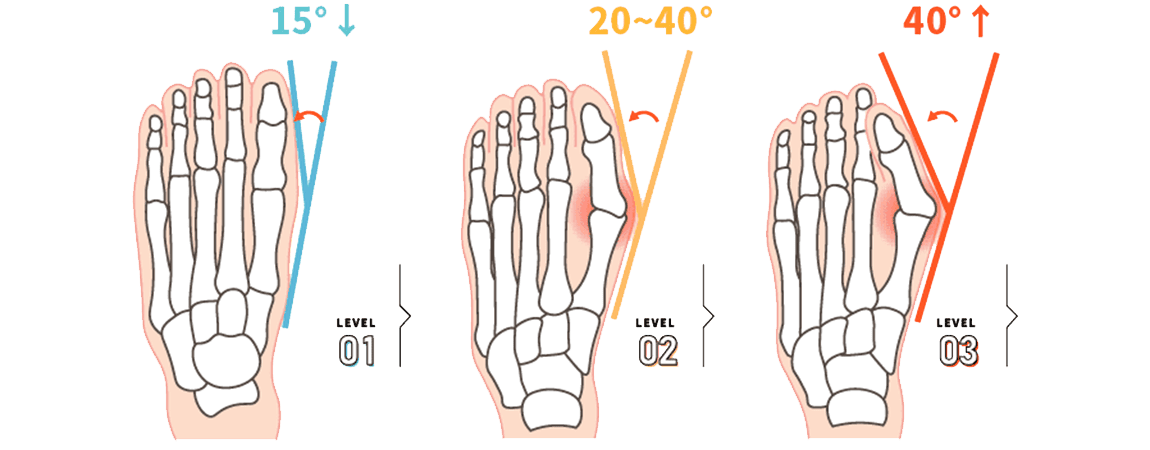
Bunions (Hallux Valgus): More Than an Aesthetic Concern—A Skeletal Misalignment
What is a Bunion? Known medically as Hallux Valgus, a bunion occurs when the big toe (hallux) leans excessively toward the second toe, causing a bony protrusion at the base of the big toe (the first metatarsophalangeal joint). Beyond swelling and localized pain, this condition disrupts the entire foot’s balance and can lead to secondary deformities in other toes.
I. Why Does the Toe Deviate? (Root Causes)
-
Genetics & Anatomy: Family history is a major factor. Individuals born with hypermobile ligaments or abnormally shaped joints are at higher risk.
-
Improper Footwear (The Catalyst): Long-term use of high heels or narrow, pointed-toe shoes. These force the toes into a cramped space and shift body weight onto the fragile forefoot joints.
-
Biomechanical Imbalance (The Internal Cause): * Overpronation: When the arch collapses and the ankle rolls inward, the big toe is forced to bear abnormal lateral (sideways) pressure during toe-off.
-
Force Vector Shift: Instead of releasing energy through the midline, the foot’s force is pushed outward, aggravating the joint protrusion.
-
II. Progression of Symptoms
-
Early Stage: Occasional redness and swelling; tenderness when wearing tight shoes.
-
Middle Stage: Development of a thick callus or bursitis over the protrusion; the big toe begins crowding the second toe, potentially causing Hammer Toe.
-
Late Stage: Restricted joint mobility, severe walking difficulty, and pain radiating through the entire forefoot and arch.
III. Management & Care Strategies
-
Footwear Principles: Switch to a Wide Toe Box and soft materials to provide ample room for the joint.
-
Mechanical Compensation—The Strategic Role of Insoles: As insole specialists, we believe that "Pronation Control" and "Forefoot Offloading" are key to slowing progression:
-
Restoring Arch Support: By correcting overpronation, our insoles reduce the lateral load on the big toe at its source.
-
Integrated Metatarsal Pads: These lift the transverse arch, redistributing pressure away from the first metatarsophalangeal joint.
-
Deep Heel Cup: Stabilizes the hindfoot to ensure a linear gait, preventing the foot from sliding and rubbing against the shoe interior.
-